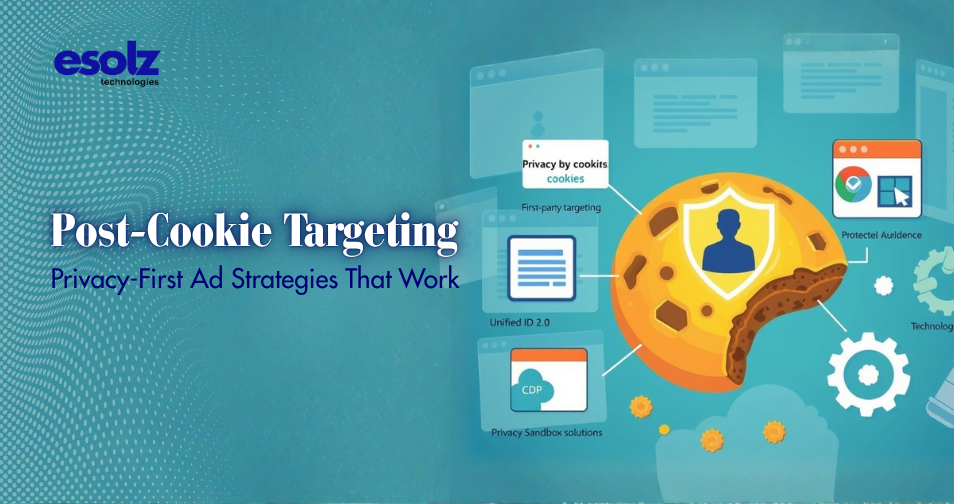
The advertising world is entering a new era. With third-party cookies fading away, marketers and business owners are being forced to rethink how they reach and engage audiences online. This shift, often referred to as the “post-cookie era,” is not the end of personalized advertising. Instead, it’s an opportunity to adopt privacy-first ad strategies that build trust, maintain compliance, and deliver stronger long-term results. For businesses that depend on digital advertising to acquire customers, this evolution is crucial to understand. Let’s explore what post-cookie targeting means, why it matters, and how you can adapt your marketing strategy to thrive in a privacy-conscious landscape.
Understanding the End of Third-Party Cookies
For years, third-party cookies have powered online advertising. They allowed marketers to track user behavior across multiple websites, build detailed audience profiles, and deliver highly targeted ads. However, as privacy concerns grew, browsers began restricting this tracking mechanism. The move was inevitable—over 70% of consumers say they are more concerned about online privacy than ever before, and a large portion of internet users actively block cookies. As a result, Google Chrome, Safari, and Firefox have all taken steps to phase out third-party cookies completely.
This change disrupts how advertisers traditionally targeted, retargeted, and measured campaign performance. But it also opens the door for more transparent, ethical, and user-centric marketing practices.
Why Business Owners Should Care About Post-Cookie Targeting
In a post-cookie world, brands can no longer rely on external data sources to understand customer behavior. Instead, they must cultivate direct, trusted relationships with their audiences. This means investing in strategies like cookieless marketing that prioritize consent, transparency, and relevance. Businesses that embrace privacy-first marketing not only stay compliant with evolving data regulations but also gain a competitive advantage. According to recent market data, companies that prioritize user trust see up to 25% higher engagement rates and 20% better customer retention compared to those that don’t.
The message is clear: privacy-first strategies are not a limitation—they’re a long-term business growth opportunity.
Privacy-First Ad Strategies That Work
The transition away from third-party cookies has redefined how brands connect with their audiences. While it may seem like a disruption, this change is in fact a catalyst for innovation—pushing businesses to embrace smarter, more ethical, and privacy-first marketing practices. Below are the most effective privacy-first advertising strategies helping brands achieve impactful results without compromising user trust or regulatory compliance.
Leverage First-Party Data
In the post-cookie landscape, first-party data has become the foundation of successful digital advertising. This includes any data you collect directly from your audience—such as website activity, CRM information, newsletter subscriptions, loyalty program interactions, and purchase histories. This data is inherently more accurate and valuable since it represents real interactions between your brand and your customers. By analyzing this information responsibly, businesses can create detailed customer segments and deliver hyper-personalized marketing messages—without relying on invasive third-party tracking. To unlock the full potential of first-party data, consider investing in Customer Data Platforms (CDPs). These systems consolidate scattered customer information into a unified, privacy-compliant database. This enables seamless segmentation, audience targeting, and campaign optimization—all while respecting user consent. The outcome? Better targeting accuracy, higher engagement, and increased customer loyalty driven by authenticity and trust.
Contextual Targeting
As cookie-based behavioral targeting fades, contextual targeting is emerging as one of the most effective privacy-first advertising methods. Rather than following users around the web, contextual advertising focuses on the environment in which the ad appears. For instance, a company selling organic food can place its ad within articles about healthy living, diet tips, or eco-friendly recipes. This ensures that ads are naturally aligned with user interests—without tracking individual behavior.
With the help of AI and Natural Language Processing (NLP), modern contextual targeting has evolved beyond simple keyword matching. Advanced systems now analyze sentiment, tone, and visual content to match ads with relevant contexts more accurately. This method not only enhances relevance but also boosts engagement—businesses adopting contextual targeting have observed up to a 30% increase in click-through rates compared to traditional cookie-based campaigns.
Build a Consent-Based Relationship
Privacy-first advertising thrives on trust—and that begins with user consent. Consumers today expect transparency about how their data is collected, stored, and used. A proactive approach to consent management demonstrates respect for user privacy while ensuring regulatory compliance. Implementing a Consent Management Platform (CMP) allows businesses to give users control over their data preferences. When customers willingly share information, it tends to be more accurate, actionable, and compliant.
Brands that prioritize clear communication and consent see measurable benefits—up to 40% higher trust levels and significantly improved customer satisfaction. These relationships extend beyond single transactions, fostering long-term loyalty and advocacy.
Utilize Identity Solutions and Data Clean Rooms
With cookies gone, identity resolution and data clean rooms are emerging as crucial tools for privacy-first targeting. A data clean room provides a secure, neutral environment where brands, publishers, and advertisers can analyze anonymized user data without exposing personal identifiers. This enables accurate audience insights, campaign measurement, and performance tracking—without breaching privacy laws. Meanwhile, identity solutions such as Unified ID 2.0 and Google’s Privacy Sandbox allow advertisers to use encrypted identifiers that replace third-party cookies. These identifiers are based on user consent and are anonymized, ensuring both personalization and compliance.
Together, these technologies enable precise targeting and performance evaluation—offering businesses the best of both worlds: personalization and privacy.
Invest in Predictive and AI-Driven Targeting
Artificial Intelligence (AI) and machine learning have become essential in navigating the post-cookie environment. By analyzing first-party and contextual data, AI models can predict user intent, optimize ad placements, and personalize campaigns without tracking users individually. Predictive analytics tools can identify which users are most likely to convert, what content resonates with specific segments, and the best times to serve ads. This data-driven approach not only enhances campaign performance but also minimizes wasted impressions and ad spend.
Businesses that have integrated AI-driven targeting into their advertising efforts report up to a 35% improvement in ROI compared to traditional methods. The key is to use these tools responsibly—focusing on anonymized, consent-based insights rather than intrusive behavioral tracking.
Strengthen Email and Loyalty Marketing
While many marketers chase new technologies, email marketing and loyalty programs remain powerful, privacy-respecting tools for customer engagement. When users voluntarily subscribe or join loyalty schemes, they offer high-quality, permission-based data that can be leveraged for personalization. Segmenting customers by behavior, purchase patterns, or engagement level allows brands to tailor content and offers that genuinely resonate. For example, sending personalized product recommendations based on purchase history builds a sense of value and relevance.
Moreover, loyalty programs encourage repeat business, helping brands nurture long-term relationships. This approach not only drives sales but also enhances customer trust—something that anonymous, cookie-based advertising could never achieve.
Focus on Transparency and Trust-Building
In the post-cookie world, trust is the new currency. Businesses that are transparent about their data collection practices and advertising strategies stand out in an increasingly privacy-conscious marketplace. By clearly communicating how user information is handled and offering easy opt-out options, brands can position themselves as ethical and customer-centric. This transparency fosters stronger emotional connections with audiences.
Recent studies show that companies making privacy a core part of their brand identity see up to a 50% increase in brand trust and enjoy greater word-of-mouth referrals. When customers know they can rely on you to protect their data, they’re more likely to engage, recommend, and remain loyal to your brand.
Measuring Success Without Cookies
As third-party cookies phase out, one of the most significant challenges facing advertisers is measuring campaign success accurately. Traditional attribution models that depended on cross-site tracking are no longer effective in this privacy-first environment. Businesses must now embrace privacy-safe measurement techniques that offer meaningful insights while safeguarding user data.
Below are the key approaches reshaping how marketers evaluate performance without compromising user privacy.
Aggregated Reporting
In the post-cookie landscape, aggregated reporting is emerging as a cornerstone of data measurement. Instead of tracking individual users, it collects and processes anonymized, group-level data to evaluate campaign performance. This method allows marketers to measure outcomes such as conversions, click-through rates, and reach—without exposing personal identifiers. It ensures compliance with privacy regulations while still delivering actionable insights into audience behavior and campaign effectiveness.
For business owners, aggregated reporting provides a balanced solution: it maintains analytical accuracy while reinforcing brand integrity through responsible data handling. Over time, as more privacy frameworks evolve, aggregated reporting will become the standard for ethical, scalable performance measurement.
Server-Side Tracking
Another effective approach is server-side tracking, which shifts data collection from third-party scripts to your own secure servers. Unlike traditional browser-based methods that rely on cookies, server-side tracking allows businesses to manage data directly, ensuring more control, transparency, and compliance. When users interact with your website or app, their behavior data is sent to your server, where it’s processed securely before being forwarded to analytics or ad platforms. This reduces data loss caused by browser restrictions and ad blockers while keeping user information protected.
Moreover, server-side tracking enhances data accuracy by eliminating inconsistencies caused by device or browser differences. For business owners, it means more reliable insights, improved attribution, and greater confidence in decision-making—all while respecting user privacy.
Incrementality Testing
When cookies are no longer available, incrementality testing becomes one of the most reliable methods for assessing the true impact of ads. Instead of relying on user-level tracking, this approach compares the behavior of two groups—those exposed to your ads and those who are not. By analyzing the difference in outcomes between these groups, businesses can determine whether their campaigns are genuinely driving results or merely capturing existing demand. This technique helps marketers distinguish correlation from causation, leading to more efficient budget allocation and strategy refinement.
For instance, if a campaign results in higher conversion rates among the exposed group compared to the control group, it confirms that the advertising effort contributed to real growth. Incrementality testing provides clear, privacy-safe validation of marketing ROI without depending on individual identifiers.
Preparing Your Business for the Future With Post-Cookie Targeting
Transitioning to a privacy-first digital marketing model may initially appear challenging, especially for businesses that have long relied on third-party cookies for targeting and measurement. However, this transition represents a critical opportunity to future-proof your marketing strategy, strengthen customer relationships, and align your brand with evolving data privacy standards.
The key is to start early and plan strategically. As the digital landscape moves toward greater user control and transparency, businesses that adapt now will be better positioned to thrive in this new era of trust-based marketing.
Post-Cookie Targeting: Audit Your Current Data Practices
Begin by conducting a thorough audit of your existing data collection, storage, and usage processes. Identify where and how third-party cookies are currently being used in your campaigns, analytics, and customer insights. This assessment helps you understand your level of dependency on external data and uncover opportunities to transition toward first-party and zero-party data—information users willingly share in exchange for personalized experiences.
Regular audits also ensure that your organization remains compliant with privacy regulations such as GDPR, CCPA, and upcoming regional laws, protecting both your reputation and your customers’ trust.
Post-Cookie Targeting: Phase Out Third-Party Dependencies
The next step is to reduce reliance on third-party cookies and tracking systems gradually. Replace them with privacy-centric alternatives such as contextual targeting, consent-based personalization, and server-side tracking. Start by updating your website’s cookie policies and implementing tools that prioritize user consent and transparency. Simultaneously, invest in technologies like Customer Data Platforms (CDPs) and identity solutions that help you collect and unify first-party data responsibly.
By doing this early, your business can minimize disruption when major browsers fully eliminate third-party cookies, ensuring a smooth and compliant transition.
Post-Cookie Targeting: Adopt Ethical and Transparent Data Strategies
Building a future-ready advertising framework goes beyond compliance—it’s about fostering long-term trust with your customers. Communicate openly about your data practices, clearly explaining how and why user information is collected. Transparency reassures customers that their privacy is valued and protected. In return, they’re more likely to engage, share accurate data, and remain loyal to your brand. Incorporate strong privacy policies, visible consent options, and accessible account settings that empower users to manage their preferences easily.
By embracing ethical marketing, you demonstrate accountability and integrity—qualities that modern consumers increasingly look for when choosing which brands to support.
Post-Cookie Targeting: View Privacy as a Competitive Advantage
While many businesses view privacy regulations as restrictive, forward-thinking brands see them as an opportunity for differentiation. Consumers are becoming more selective about the companies they trust with their personal data, and businesses that prioritize privacy will stand out.
Organizations that align marketing with ethical data use report higher engagement rates, stronger brand loyalty, and improved conversion metrics. In essence, privacy isn’t just about compliance—it’s about creating a better customer experience built on transparency and respect.
Summing Up
The end of third-party cookies is not the end of personalized advertising—it’s the start of a smarter, more sustainable era of privacy-first marketing. By leveraging first-party data, contextual targeting, AI-driven insights, and transparent consent practices, businesses can continue delivering relevant ads without compromising user trust.
For business owners, this transition represents an opportunity to lead with integrity, innovate with technology, and build customer relationships that stand the test of time.